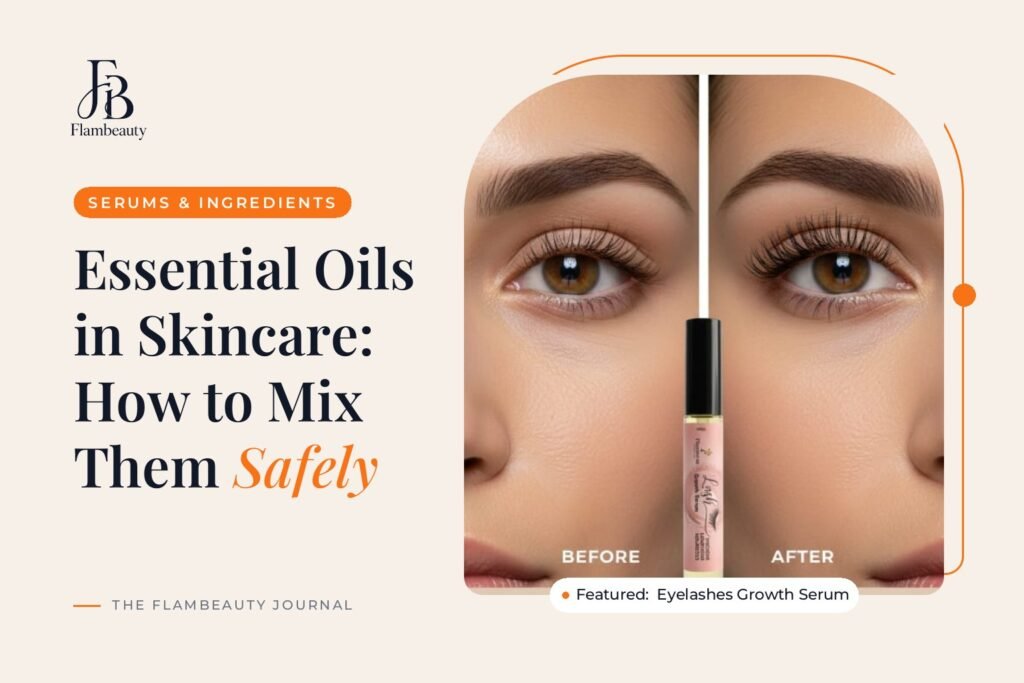
Learn how to mix essential oils into skincare safely: dilution ratios, carrier oils, patch testing, and which oils suit different skin types. Expert...
To mix essential oils safely into skincare, always dilute them in a carrier oil to 1–2% for the face, patch test first, and avoid photosensitising oils before sun exposure. Never apply undiluted essential oils to skin, and consult a dermatologist for persistent concerns.
Key takeaways
- Essential oils should be diluted to 1–2% for facial use; 1% is 1 drop per 5 ml (1 teaspoon) of carrier oil.
- Always patch test on the inner forearm for 24–48 hours before applying a new blend to your face.
- Some citrus oils increase sun sensitivity; avoid them if you spend time outdoors in strong sun.
- Store blends in dark glass bottles away from heat and light to slow oxidation.
- Essential oils are not treatments for skin conditions; see a dermatologist for persistent acne, eczema, or rosacea.
What are essential oils and how do they work in skincare?
Essential oils are concentrated plant extracts obtained by distillation or expression. They contain volatile aromatic compounds that give plants their scent and can have cosmetic benefits such as soothing or brightening the look of skin. In skincare, they are used for fragrance, for their astringent or calming properties, and sometimes for their antioxidant content. However, they are potent and can cause irritation if used incorrectly.
Essential oils are not the same as carrier oils. Carrier oils (like jojoba, almond, or sunflower) are pressed from nuts, seeds, or fruits and are used to dilute essential oils. They also provide emollient benefits. Essential oils are far more concentrated and must always be diluted before touching your skin.
Which essential oils are commonly used for different skin types?
Different essential oils are traditionally used for different skin concerns, but evidence for many claims is limited. The table below summarises common uses, but individual reactions vary.
| Essential oil | Commonly used for | Notes |
|---|---|---|
| Lavender | Soothing, calming scent | Generally well tolerated; may help calm the look of redness. |
| Tea tree | Oily and acne-prone skin | Antiseptic properties; use at low dilution (0.5–1%). |
| Peppermint | Cooling sensation | Can be irritating; avoid on sensitive skin. |
| Chamomile | Sensitive or reactive skin | Soothing; often used in small amounts. |
| Lemon | Brightening (aroma) | Photosensitising; avoid before sun exposure. |
| Frankincense | Mature or dry skin | May support skin tone; gentle. |
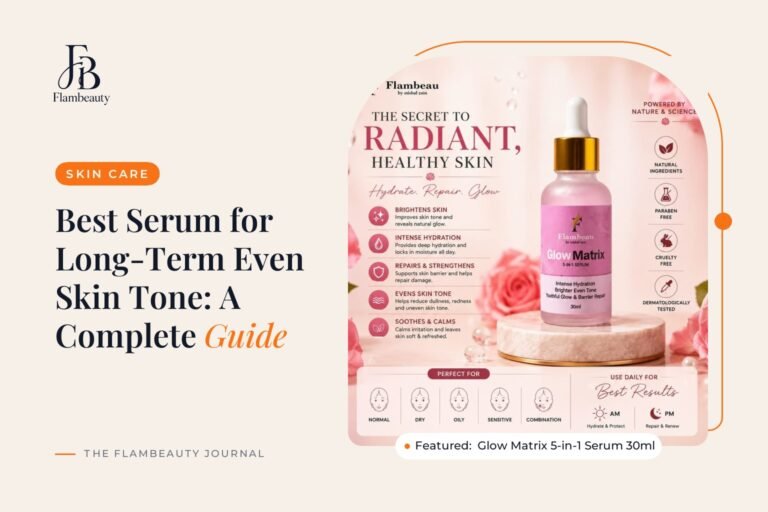
For Pakistani skin, which often deals with heat and humidity, lighter carrier oils like jojoba or grapeseed may feel more comfortable than heavy ones. If you have oily or acne-prone skin, you might explore products formulated for such skin, like those in our Oils & Serums category. For a ready-made option, consider Glow Matrix 5-in-1 Serum 30ml, which is formulated with multiple benefits.

How to dilute essential oils safely: step-by-step
Proper dilution is the most important safety step. For facial skincare, a dilution of 1–2% is generally recommended. One percent means 1 drop of essential oil per 5 ml (1 teaspoon) of carrier oil. Two percent is 2 drops per 5 ml. For body care, you can go up to 3%, but for the face, keep it low.
Here is a simple process:
- Choose a carrier oil suited to your skin type (e.g., jojoba for oily skin, almond for dry).
- Measure the carrier oil into a clean glass bowl.
- Add the essential oil drop by drop, counting carefully. For a 10 ml bottle, use 2–4 drops for 1–2% dilution.
- Stir gently to combine.
- Transfer to a dark glass bottle and label with the date and ingredients.
- Patch test first: apply a small amount to your inner forearm and wait 24–48 hours. If no reaction, proceed.
Always wash your hands after handling essential oils, and avoid contact with eyes and mucous membranes.
What are common mistakes to avoid when mixing essential oils?
Many people overcomplicate or misuse essential oils. Here are frequent errors:
- Using undiluted oils: Never apply essential oils neat to the skin. This can cause burns, irritation, and sensitisation.
- Adding too many oils: More is not better. Stick to 1–2 essential oils per blend to reduce risk of irritation.
- Ignoring photosensitivity: Citrus oils (bergamot, lemon, lime) can make skin more sensitive to UV rays. Avoid them if you will be in the sun, or use them only at night.
- Skipping the patch test: Even natural ingredients can cause allergic reactions. Always test.
- Storing improperly: Essential oils degrade with heat and light. Keep blends in dark glass and away from sunlight.
- Using essential oils as a treatment: They are cosmetic ingredients, not medicines. Do not use them to treat acne, eczema, or other conditions without medical advice.
If you have sensitive skin, you may prefer to use ready-formulated products. Our blog archive has more tips on building a safe routine.
How to choose quality essential oils and carrier oils
Quality matters for safety and efficacy. Look for essential oils that are 100% pure and preferably organic. Avoid those labelled “fragrance oil” or “perfume oil”, as these are synthetic and not suitable for therapeutic use. Reputable brands provide the botanical name (e.g., Lavandula angustifolia) and batch information.
For carrier oils, choose cold-pressed and unrefined where possible. Jojoba is technically a wax ester and closely resembles human sebum, making it suitable for most skin types. Sweet almond oil is nourishing for dry skin, while grapeseed oil is light and non-greasy. Store carrier oils in a cool, dark place to prevent rancidity.
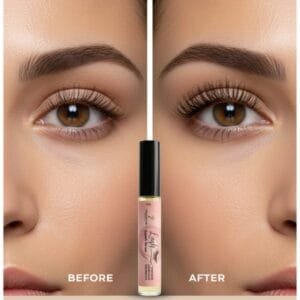
When buying skincare products that contain essential oils, check the ingredient list for the essential oil and its position—if it’s near the end, the concentration is likely low. For a product that already incorporates essential oils in a safe formulation, consider Eyelashes Growth Serum – Longer, Healthier-Looking Lashes, which may contain botanical extracts.
How to adapt essential oil use to different skin types
Your skin type should guide your choice of essential oils and carrier oils. Here is a breakdown:
Dry skin
Use heavier carrier oils like avocado or sweet almond, and consider essential oils like frankincense or chamomile, which are often used for their soothing properties. Avoid peppermint, which can be drying.
Oily and acne-prone skin
Choose light carrier oils like jojoba or grapeseed. Tea tree oil is commonly used for its antibacterial properties, but dilute to 0.5–1% to avoid irritation. For more on natural ingredients for oily skin, see our post on Neem for Acne & Oily Skin.
Sensitive skin
Less is more. Use a 1% dilution or lower, and stick to gentle oils like lavender or chamomile. Always patch test. If you have reactive skin, you may prefer fragrance-free products. For hydration without essential oils, read Choosing a Hydrating Serum for Oily, Dehydrated Skin.
Combination skin
You can use a medium-weight carrier oil like sunflower and a mild essential oil like lavender. Adjust the dilution based on which areas are oilier or drier.
Remember that essential oils are not a substitute for medical care. If you have persistent skin concerns, consult a dermatologist. For general skin health, the NHS recommends a balanced diet and gentle skincare.
Frequently Asked Questions
Can I use essential oils directly on my skin?
No, essential oils should never be applied undiluted to the skin. They are highly concentrated and can cause irritation, burns, or allergic reactions. Always dilute them in a carrier oil before use.
What is the safest dilution for essential oils on the face?
A 1–2% dilution is generally recommended for facial skincare. One percent means 1 drop of essential oil per 5 ml (1 teaspoon) of carrier oil. Start with 1% and increase only if your skin tolerates it well.
Which essential oils should I avoid if I have sensitive skin?
Sensitive skin may react to strong oils like peppermint, eucalyptus, and citrus oils. Stick to gentle options like lavender or chamomile, and always perform a patch test before applying to your face.
Do essential oils expire?
Yes, essential oils have a shelf life, typically 1–3 years depending on the oil. Citrus oils oxidize faster. Store them in dark glass bottles away from heat and light, and replace when they smell different or become cloudy.
Written by Mishal Rehman, owner of Flambeauty — sharing practical, professional beauty and skincare guidance.
Updated: October 2026
More from the Journal

Jasmine Extract for Skin: Fragrance and Hydration Benefits
Jasmine extract is used in skincare for its pleasant fragrance and its ability to help hydrate and soothe the skin.…
Vitamin E for Skin: Healing & Antioxidant Benefits
Vitamin E is a fat-soluble antioxidant that protects skin cells from free radical damage, supports the healing process, and helps…
Best Serum for Long-Term Even Skin Tone: A Complete Guide
The best serum for long-term even skin tone contains a mix of brightening actives like vitamin C, niacinamide, and alpha…